When you book space at a trade show, one of the first choices you make is how many sides of your stand will face an aisle. That single decision shapes your budget, your design, how visitors move through your space and how much attention you can attract. This guide explains the four standard stand types, what each one is good at and the questions to ask before you book.
What “Open Sides” Means
Exhibition halls are divided into a grid of plots separated by aisles. The number of aisles your plot touches decides your stand type:
- Inline (row) stand: one open side, neighbours on the left, right and back.
- Corner stand: two open sides, at the end of a row.
- Peninsula stand: three open sides, a neighbour only at the back.
- Island stand: four open sides, a free-standing block.
More open sides mean more visibility, but also more surface to design, more walls to finish properly and, usually, a higher space price per square metre set by the organiser. Rules on wall height, hanging structures and how much of each side you can close also tend to differ by stand type, so always read the organiser’s technical guidelines.
Inline Stand: Focused and Efficient
An inline stand has one face to the aisle, so everything depends on the back wall and the front edge.
Good for: first-time exhibitors, smaller product ranges, tight budgets, and companies testing a new market.
Design tips:
- Make the back wall do the work: one clear message, readable from the aisle.
- Keep the front open. A counter across the whole front blocks people out.
- Light the back wall, not just the floor, so the stand doesn’t look dark next to neighbours.
Corner Stand: Two Streams of Visitors
A corner stand catches traffic from two aisles. It is often the best value step up from an inline stand.
Good for: companies that want more visibility without the cost of a peninsula or island.
Design tips:
- Put the reception counter or main product right at the corner, where both streams meet.
- Use the two closed walls for graphics and product displays.
- A suspended or raised header helps people find you from further away (check height rules first).
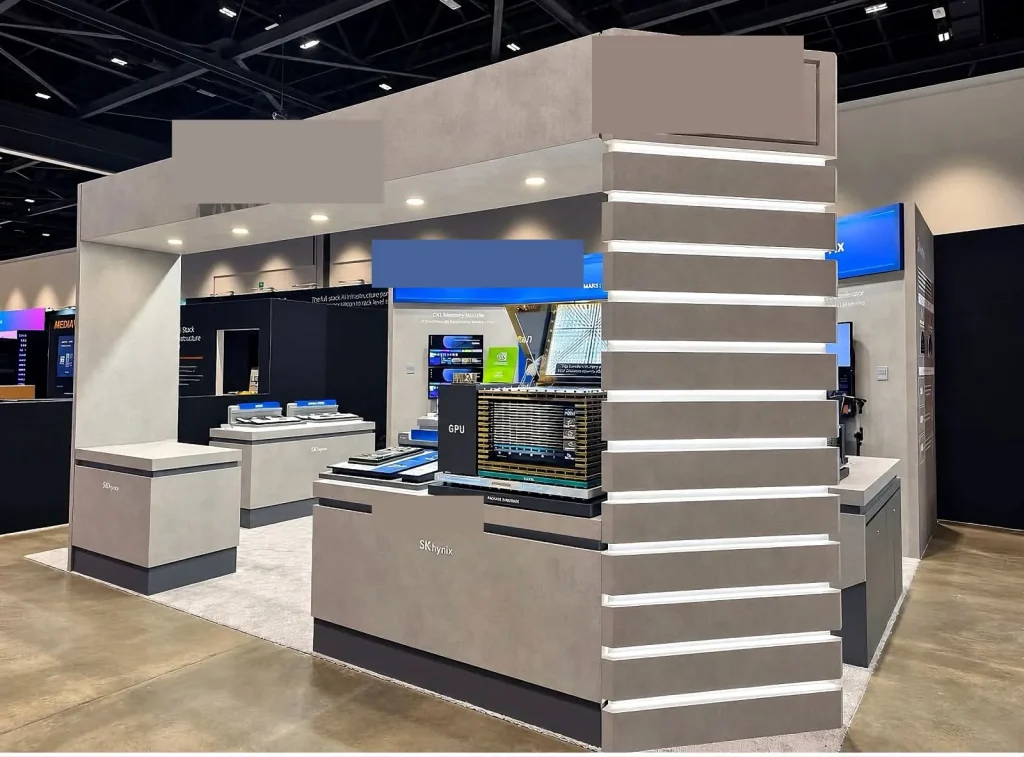
In our corner stand projects, a common layout is products and screens along the two closed walls, with a counter at the corner and a few high tables for short conversations.
Peninsula Stand: A Strong Front with a Back Wall
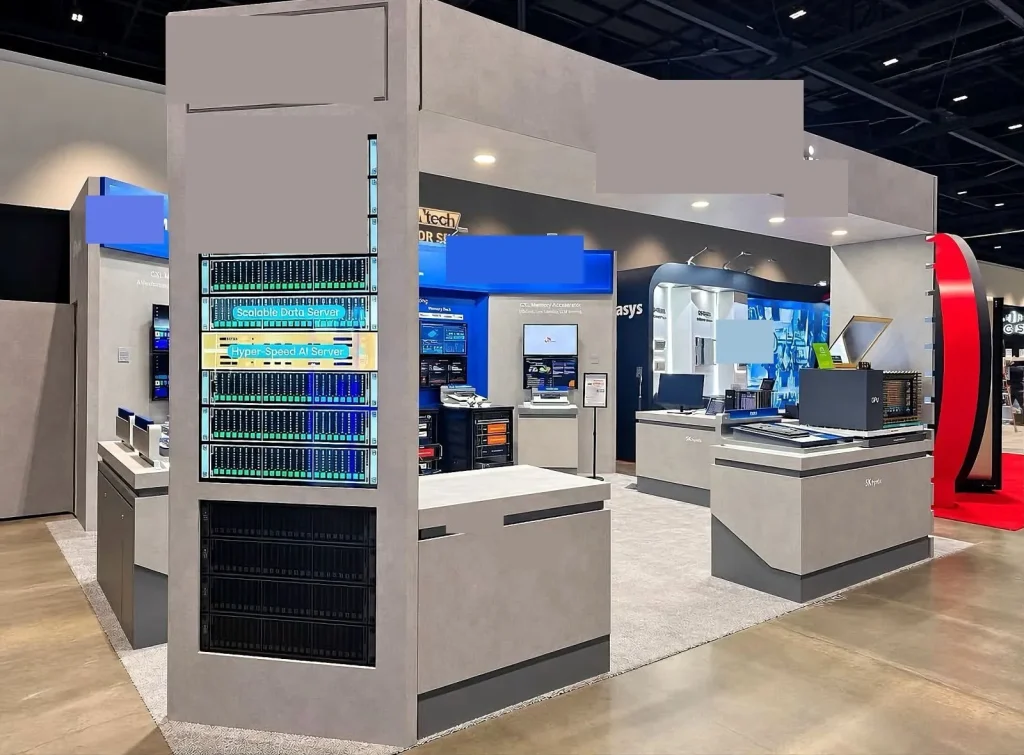
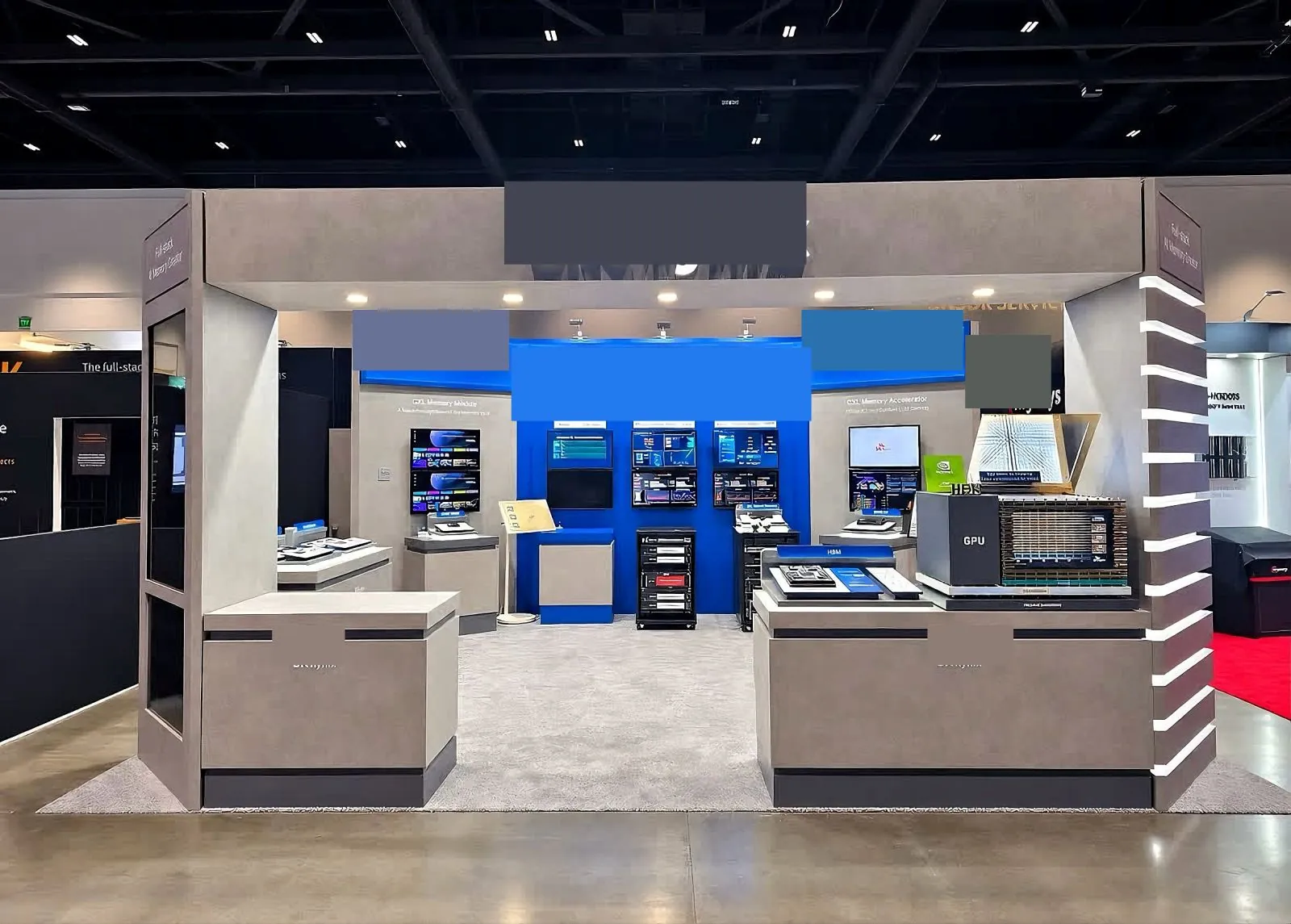
A peninsula stand is open on three sides and backed by one neighbour. You get island-like visibility while keeping a full back wall for big graphics, LED screens or storage.
Good for: established exhibitors with several product lines, live demos or a need for a small meeting room.
Design tips:
- Use the back wall as the stand’s “billboard” and hide a storeroom behind it.
- Place demo stations or plinths along the open front so passers-by can see products working.
- Keep sightlines clear from all three aisles; tall walls in the middle cut the stand in half.
Island Stand: Maximum Presence
An island stand stands alone, visible and accessible from every direction. It offers the most freedom and the biggest brand statement.
Good for: larger companies, product launches, and brands that want to be a landmark in the hall.
Design tips:
- Plan circulation first. With four entrances, the layout must make sense from every side.
- Use a strong overhead element, such as a suspended header, ring or light feature, so the stand can be found from across the hall.
- Decide what must be enclosed (meeting room, storage, kitchen) and keep it compact in the centre or one corner.
- Remember that every side is a “front”. There is no back wall to hide cables, storage or unfinished surfaces.
How to Choose: Five Questions
- What is the main goal? Lead generation and many short conversations favour open layouts. Private negotiations need a meeting room, which favours a peninsula or island.
- How many products do you need to show? A single hero product can work on an inline or corner stand. Several lines with demos need more open frontage.
- What is the total budget, not just the space price? Larger, more open stands need more design, materials, lighting and labour. Ask your builder for an estimate before you confirm the plot.
- Where is the plot? A corner near a main entrance can outperform a larger stand at the back of the hall.
- What are the hall rules? Height limits, rigging (hanging) permission and fire regulations can rule out some designs.
Common Mistakes
- Booking an island stand and then designing it like an inline stand, with walls on all sides.
- Closing the open sides with long counters or graphics.
- Forgetting storage for brochures, bags and samples.
- Ignoring lighting. Hall lighting alone is rarely enough to make products stand out.
FAQ
Is an island stand always better than a peninsula stand?
No. An island gives the most visibility, but it also needs a design that works from four sides and usually costs more to build. If you need a large back wall for screens or storage, a peninsula can be the better choice.
Can I change my stand type after booking?
That depends on the organiser and on what plots are still available. Ask early. Plot allocation for popular shows often happens months in advance.
Does a corner stand cost more than an inline stand?
Organisers often charge a corner surcharge, and you have one more side to design and finish. Check the organiser’s price list and ask your builder to quote both options.
Do I need a suspended header?
Not always, but on island and peninsula stands it is one of the most effective ways to be seen from a distance. Rigging must be approved by the venue, so plan it early.
Planning Your Next Stand?
Bodon designs island, peninsula, corner and inline stands, coordinates on-site build-up and exhibitor registration and paperwork, and can help you weigh up stand types against your goals and budget before you book. Send us your show, plot size and stand type for a quote →